
As of July 1, 2025, Florida schools must comply with new statewide limits on student phone use under HB 1105. The law reflects growing concern that devices are undermining focus, learning, and student well-being — and districts are now working to put clear policies in place.
What the Law Says
- Elementary and middle school students may not use a cell phone or other personal electronic device at any time during the school day.
- High school students are prohibited from device use during instructional time, unless explicitly authorized by a teacher for educational purposes or within board-approved “usage zones.”
- Exceptions apply for medical needs, Individualized Education Programs (IEPs), and certain instructional accommodations.
- The law also establishes a pilot program in six districts to study full-day restrictions in high schools, with a model policy due by December 1, 2026.
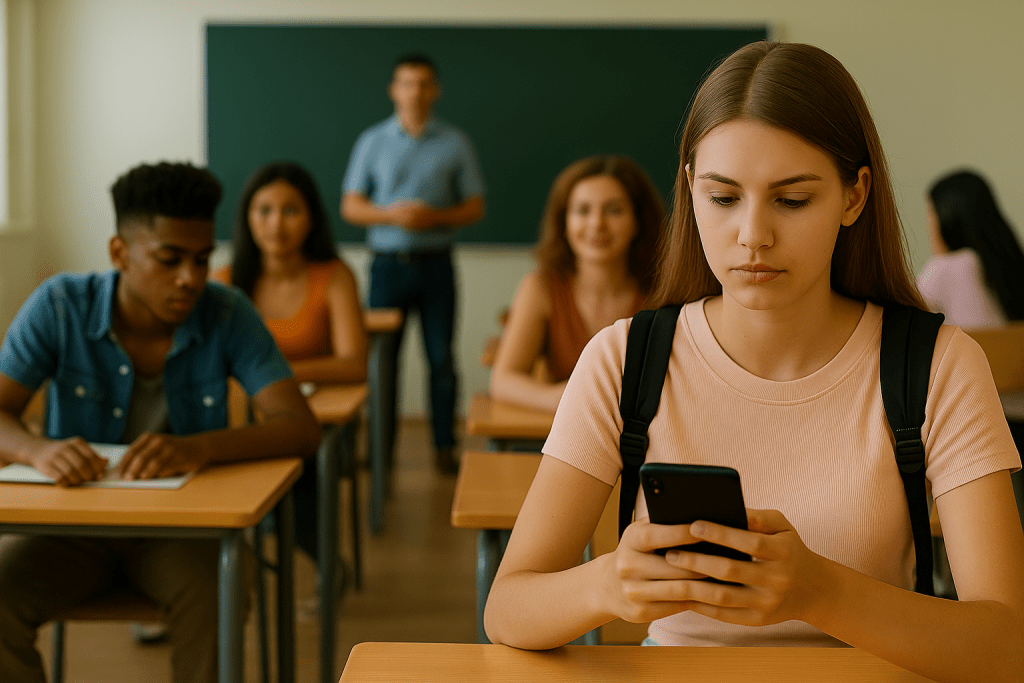
Why It Matters for Florida Schools
- Distraction & Focus: New restrictions reflect growing concern that device distractions interrupt learning.
- Mental Health & Well-Being: The U.S. Surgeon General has warned that excessive social media use poses a “profound risk of harm” to youth mental health, highlighting the urgency of curbing school-day phone use.
- Enforcement Complexity: Schools will need new policies, teacher support, and clarity around exceptions. For high school, especially, assigning zones or teacher-authorized times could be challenging.
Policy Readiness: Florida’s timeline gives districts space to update handbooks, define device storage procedures, and communicate rules to students, staff, and families. The real challenge isn’t the ban itself, but ensuring consistent enforcement without adding daily conflict to already stretched teachers.
How Schools Can Respond
Practical steps districts can take now:
- Revise district/student handbooks and codes of conduct to align with HB 1105, including explicit device-use rules and exceptions.
- Define enforcement tools — where devices will be stored/offered, how to handle violations fairly across grade levels.
- Train teachers and staff on how to enforce rules, manage exceptions, and maintain instructional integrity without daily discipline conflict.
- Use piloting — consider starting with one or two high schools or middle schools to test storage solutions, teacher-led zones, etc.
- Communicate with families early: explain why the law is changing, what it means for students, and how emergencies or special needs will be handled.
National Statistics That Reinforce Florida’s Decision
- According to Pew Research, ≈ 95% of U.S. teens own a smartphone, and nearly half say they are online “almost constantly.”
- Studies show even the mere presence of a phone (turned off, face down) reduces working memory capacity and problem-solving ability (Ward et al., 2017).
- Reports from the National Center for Education Statistics show the majority of school leaders believe cell phones hurt academic performance, attention spans, or mental health.
Take Action
Florida’s HB 1105 makes clear that device restrictions aren’t optional — districts must act. With the law now in effect, schools that move quickly to refine policies and enforcement can avoid confusion, reduce teacher stress, and better protect student focus and well-being.
Download our 10 Questions Checklist to help evaluate your options for implementing phone-free environments that comply, equitably enforced, and supportive of learning.