
Generation Faraday vs. Yondr: A Smarter Fit for Your School
PHONE POUCHES FOR SCHOOLS
Looking for an alternative to Yondr bags? Choose pin-free locking, established Faraday expertise, and phone-management options built around the way your school works.
Comparing Generation Faraday and Yondr starts with your daily routine: how phones are secured, whether they stay connected, how bags hold up, and how staff manage the program. Generation Faraday combines flexible equipment choices with tracking tools and implementation support, giving schools practical ways to put their phone-free policy into action.
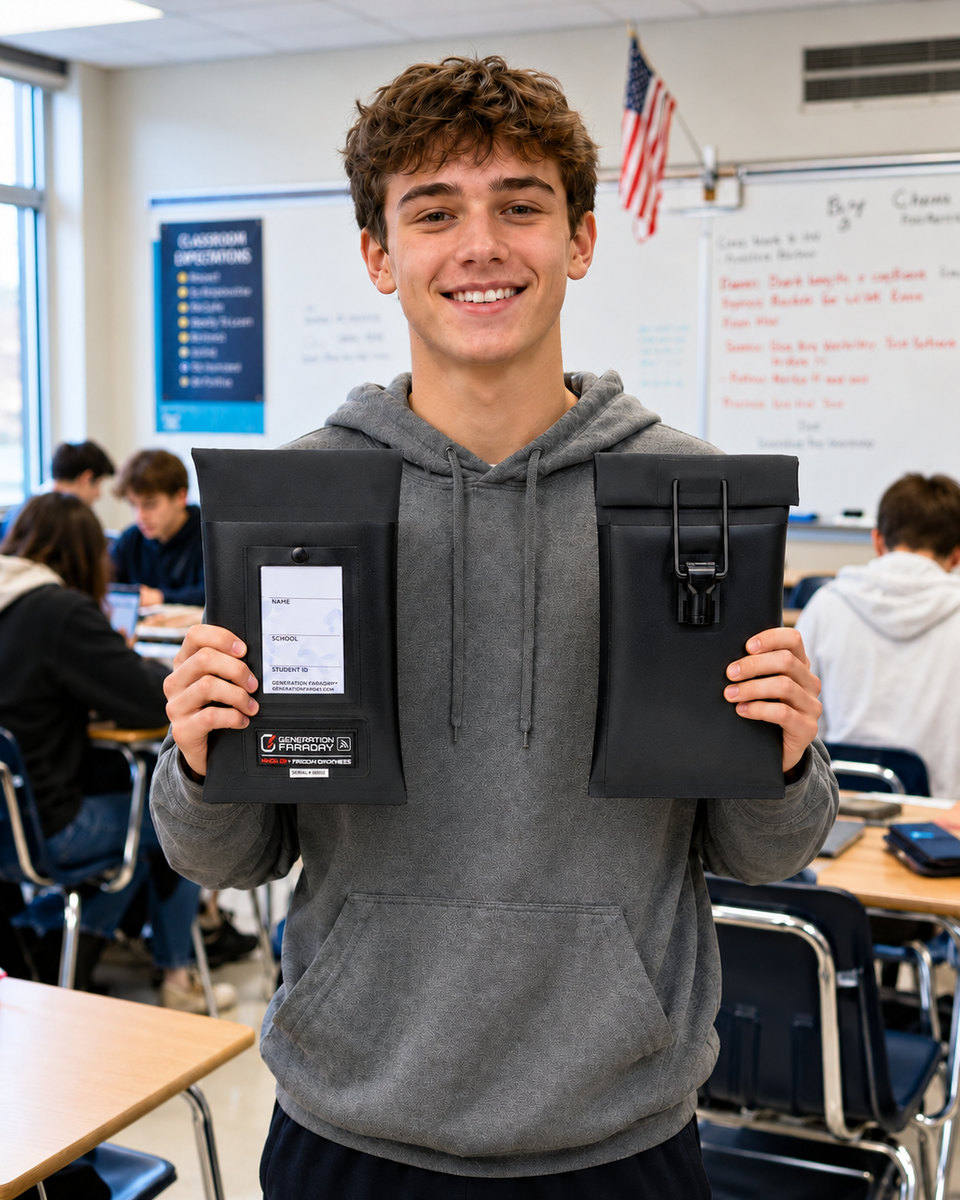
Why choose Generation Faraday over Yondr?
- Locking without a sharp pin: Max Lock uses a proprietary clasp-and-ring locking mechanism.
- A choice of bag styles: locking, magnetic, and Velcro closures, with signal-blocking and non-signal-blocking options.
- Documented durability: Max Lock lasted 10× longer on average than the competing bags tested, averaging 2,000+ open-and-close cycles.
- Established shielding experience: Generation Faraday is a division of Mission Darkness, with 10+ years in the Faraday industry supplying military, police, and other professional customers.
- A system that extends beyond bags: classroom storage, mobile collection systems, assignment tracking, and rollout support.
Generation Faraday vs. Yondr phone pouches: at a glance
| What matters to your school | Generation Faraday | Yondr |
|---|---|---|
| Locking design | Max Lock clasp closes around a metal ring; no sharp locking pin. | Describes its locking pouch as using an integrated proprietary pushpin. |
| Water protection | Max Lock has a waterproof TPU exterior with welded seams. Other models in the range use water-resistant ballistic nylon. | A comparable waterproof specification was not identified in the Yondr comparison materials reviewed. Confirm protection for the exact pouch quoted. |
| Connectivity choices | Signal-blocking and non-signal-blocking bag configurations. | Offers standard and Faraday signal-blocking pouches. |
| Closure choices | Locking, magnetic, and Velcro bag styles across the product range. | Locking pouches and a Velcro medical option described in its comparison. |
| Published shielding evidence | Mission Darkness lab reports for specified fabrics and products, plus IEEE testing resources. | No pouch-specific lab report linked in the comparison and shielding guides reviewed; request it directly. |
| Administrative tools | App for bag assignments, inventory, condition records, and compliance follow-up. | Describes a program based on policy and routine, with no software required. |
| Implementation | Five-step rollout covering planning, training, launch, and ongoing support. | Describes policy consultation, onboarding, training, and ongoing support. |
| Classroom storage accessories | Compatible wall/door organizers and wall-mounted or freestanding shelving for centralized bag storage. | Does not offer comparable classroom wall or shelf storage accessories. |
Compare the exact configurations quoted for your school. Yondr information is based on its published comparison, reviewed November 2026. Generation Faraday product and program details are linked below.
A locking phone bag without a sharp locking pin
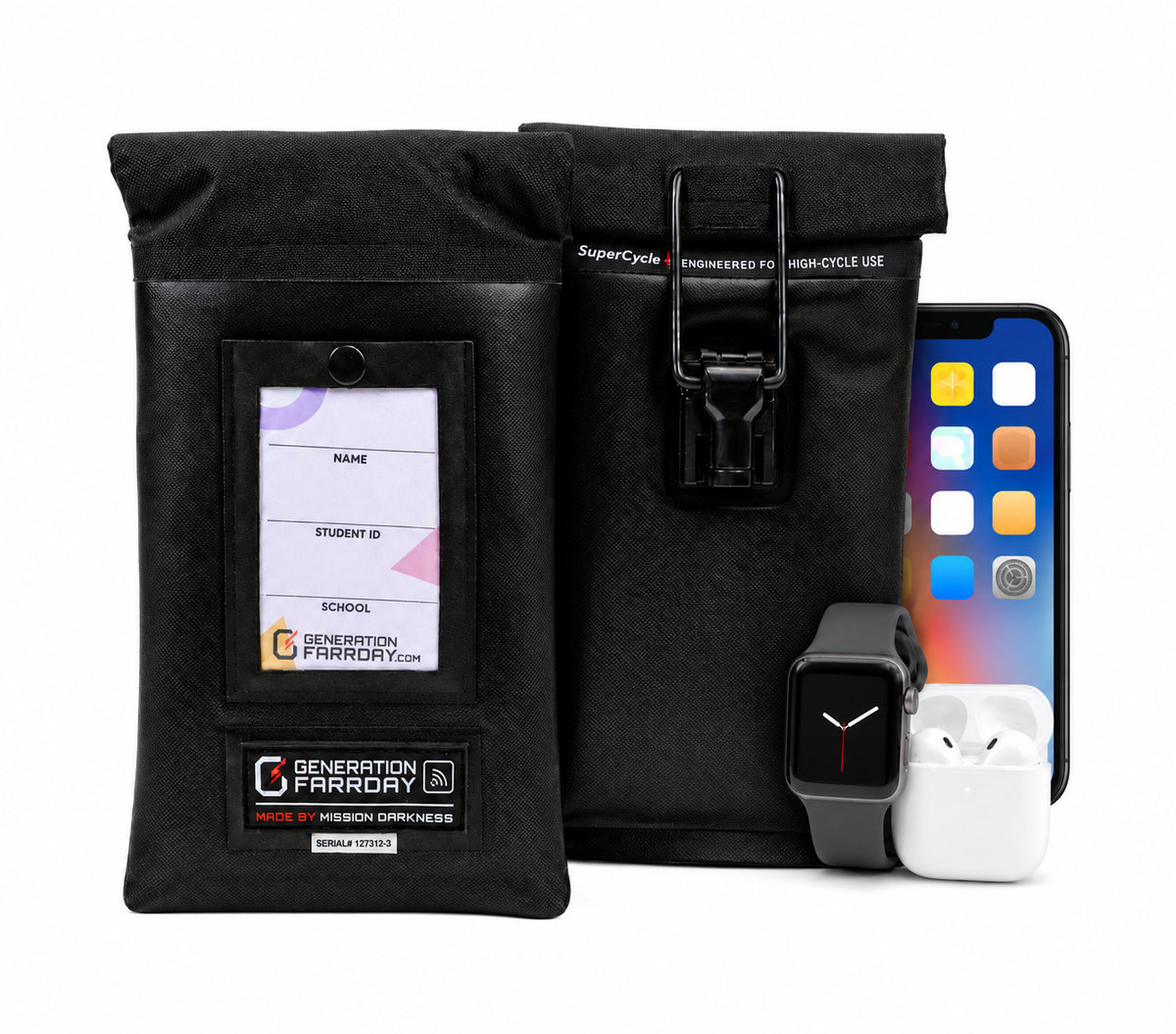
The Generation Faraday Max Lock combines a patented double-roll magnetic seal with a proprietary locking clasp that fastens around a metal ring. Staff release it using a compatible unlocking tool.
For schools looking for a pin-free alternative to Yondr pouches, that is a concrete design difference. Max Lock gives staff control over access without relying on a sharp pushpin locking mechanism. Its TPU exterior and welded seams also help protect against water, dirt, and everyday handling.
10+ years of Faraday expertise behind your school’s bags
Generation Faraday is a division of Mission Darkness, which has 10+ years in the industry supplying Faraday bags and RF-shielding solutions to military, police, digital-forensics, and other professional customers. Established in 2015, Mission Darkness brings that experience in materials, construction, and signal isolation to school phone management.
Yondr says it introduced a Faraday pouch in 2026. Schools can now ask both suppliers a more useful question: how are the materials, closure, and finished bag engineered to maintain shielding through repeated use?
Our Max Magnetic and Max Lock bags pair a roll-top magnetic closure with protective materials. Explore the Max Magnetic to see how the closure, shielding, and exterior work together. When comparing test documentation, distinguish results for shielding fabric from results for a complete, closed pouch.
Published shielding effectiveness results you can review
We make shielding evidence available through Mission Darkness / MOS Equipment’s published testing resources. Schools can review MIL-STD-188-125-2 testing documentation and IEEE 299-2006 shielding effectiveness results from Keystone Compliance, including downloadable reports.
The MIL-STD report covers fabric samples and selected Mission Darkness Faraday bags. The IEEE testing page identifies tested fabrics and enclosures and reports testing from 1.5 GHz to 40 GHz. These reports document the specified samples; they should not be read as separate certification of every Generation Faraday school-bag model.
What does Yondr publish? Its Faraday buyer’s guide describes its configuration as verified and encourages buyers to request finished-pouch testing. In the Yondr comparison and shielding guides reviewed for this page, we did not find a linked lab report identifying its tested pouch, test standard, frequency range, and measured attenuation. Ask Yondr for those documents when comparing proposals.
For your school, the useful comparison is the exact model, the tested configuration, and performance after repeated use. Our published shielding resources and separate Max Lock durability summary give you concrete evidence to examine with your team.
Durability results that go beyond the first day
In our published side-by-side durability testing, Max Lock bags averaged more than 2,000 open-and-close cycles and lasted 10× longer on average than the competing bags tested. Generation Faraday bags also continued blocking wireless signals after 2,000+ cycles.
Those results make repeated-use performance a meaningful part of your school phone pouch comparison. Ask how a bag was tested, how failure was defined, and whether shielding was checked after repeated opening and closing.
Read our Max Lock durability testing summary →
These are manufacturer-reported results for the tested products. The public summary does not identify competitor models, so the findings are not presented as a verified result against a particular Yondr model. Test cycles are not a guaranteed service life; handling, care, and opening frequency affect performance.
Choose the phone pouch that fits your policy
A schoolwide locking program, a classroom routine, and an accommodation may call for different equipment. Generation Faraday gives you a range to work with. Max bags feature a waterproof TPU exterior, while Pro bags feature a water-resistant ballistic nylon exterior. Choose the closure that fits your policy:
- Max Lock: staff-controlled access for schools that require locking bags.
- Max Magnetic: a non-locking magnetic closure for policies that allow users to open their own bags.
- Max Velcro: a Velcro closure for schools that prefer that opening routine.
- Pro Magnetic: another magnetic bag option to compare when selecting your equipment.
- Pro Velcro: a non-locking bag with a Velcro closure and water-resistant ballistic nylon exterior for everyday classroom use.
- Non-signal-blocking options: versions that keep devices connected while stored, where the school’s policy or individual accommodation requires it.
Choose the closure and connectivity configuration together. A locking bag controls physical access; a Faraday liner addresses wireless connectivity. They serve different needs.
Phone management beyond individual pouches
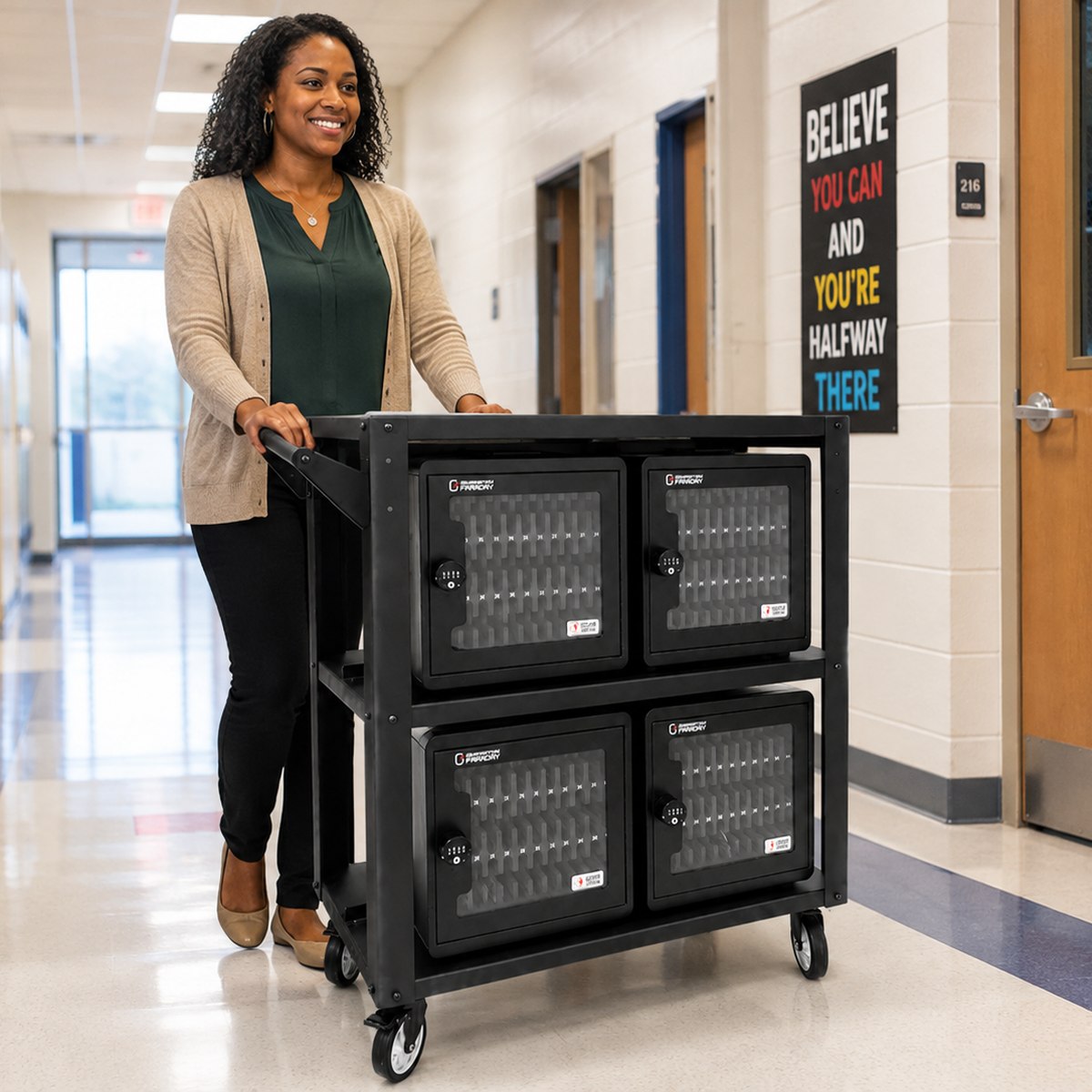
Keep bags organized when classrooms prefer centralized storage. Generation Faraday offers compatible classroom organizers and storage accessories for schools that prefer to collect phones or bags in designated wall or shelf locations. Choose a setup that fits your classroom space and daily collection routine.
The Phone Hotel hangs on a wall or over a door and accommodates all Generation Faraday bag styles. The Class Phone Organizer is an aluminum shelving unit that can be wall-mounted or placed on a table or floor, with separate compartments and mounting points for optional Unlock Docks. These organizers provide physical storage; signal blocking comes from the compatible Faraday bags used inside them.
If your school collects phones centrally, Generation Faraday also offers purpose-built storage options:
- Shielded Box: a hard-sided, lockable, signal-blocking case with 36 numbered phone compartments, a padded interior, and side handles for classroom collection and transport.
- 4-Drawer Phone Drop Box: a lockable, shielded mobile cabinet with numbered slots for up to 144 phones.
- ClassKeeper Phone Storage System: a rolling system holding up to 288 phones across eight storage boxes, with cable-and-lock retention and RFID asset-management features. The standard system does not block signals.
That breadth lets schools consider student-carried bags, classroom collection, or centralized storage within the same supplier’s range. Explore all phone-management products →
Equipment, accountability, and rollout support
The Generation Faraday App helps administrators connect bags to student assignments, maintain inventory and condition records, track replacements, and follow up on compliance issues. It gives staff an organized way to manage the equipment behind the policy.

Our five-step implementation process covers information gathering, planning, training, launch, and daily use with ongoing support. Schools can plan distribution, unlocking locations, bag assignments, and replacement procedures before rollout.
“we are already seeing a positive impact on instruction and the overall learning environment.”
— Dr. Suzy Lofton-Bullis, Deputy Superintendent, Lago Vista ISD. Read the published testimonial.
Questions schools ask about Yondr alternatives
Why is Yondr a familiar name in the school phone-pouch market?
Yondr entered the phone-free market in 2014 and was an early provider to build a school-focused pouch program. That longer presence helps explain its familiarity among school administrators.
As more states adopt school cellphone restrictions, districts have an opportunity to compare solutions against the features their policies require. Generation Faraday gives schools reasons to look beyond name recognition: pin-free locking, signal-blocking options, durable construction, multiple bag styles, centralized storage, and administrative tracking.
Generation Faraday is the newer, education-focused division of Mission Darkness, created to support focus in schools through phone and device management. It combines that dedicated school focus with Mission Darkness’s 10+ years of Faraday-industry experience. Explore our school phone-management solutions and implementation support to see how the options fit your campus.
What is an alternative to Yondr bags for schools?
Generation Faraday offers locking and non-locking phone bags, plus centralized phone storage. Schools can select equipment around their access rules, connectivity needs, and collection routines.
Do Yondr pouches block cell phone signals?
Yondr says its Faraday configuration blocks signals, while its standard pouch locks without signal blocking. Confirm the model in your quote. Generation Faraday also offers both connectivity configurations.
How does Generation Faraday compare with Yondr on cost?
Request quotes for equivalent configurations and quantities. Compare bags, unlocking equipment, implementation, software, and replacement costs. Generation Faraday offers volume-based pricing; the best comparison is the complete program your school needs.
Do Generation Faraday locking bags use a sharp pin?
No. Max Lock uses a clasp-and-ring locking mechanism. Review the product details and opening instructions with your implementation team.
Can a school choose storage instead of individual phone bags?
Yes. Explore the Shielded Box or Phone Drop Box for shielded collection, or ClassKeeper for organized physical storage. Choose the configuration that matches how your staff will collect and return devices.
Build a phone-free program around your school
If you’re evaluating Yondr alternatives, put Generation Faraday on your shortlist. Compare a pin-free lock, flexible bag styles, established shielding experience, and a broader range of school phone-management equipment.
Tell us your student count, preferred access rules, and whether signal blocking is required. We’ll help you select a configuration and prepare a school quote.
Comparison reviewed November 2026. Product options and specifications can change. Yondr is a trademark of its respective owner. Generation Faraday is not affiliated with Yondr.